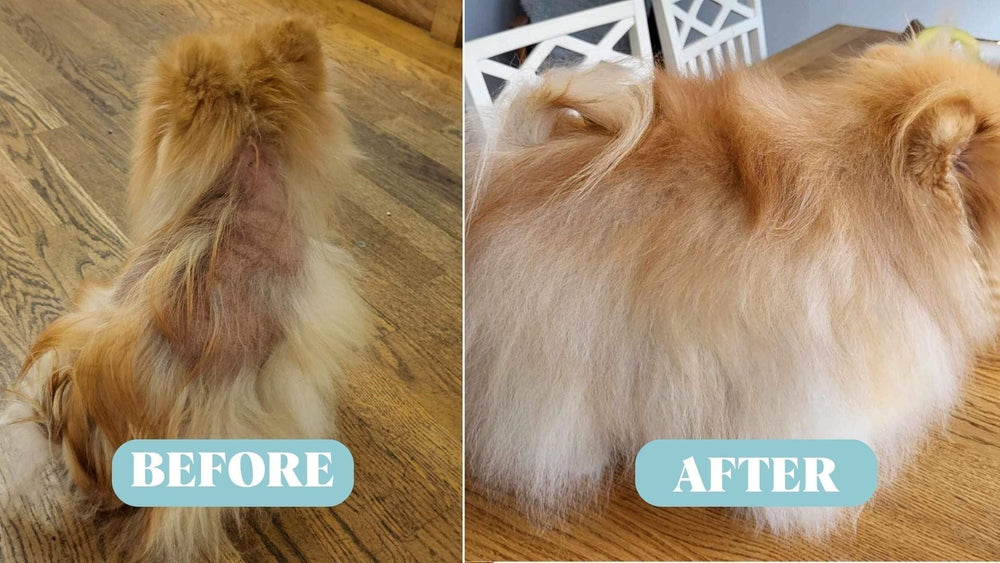
Dog hair loss, also known as dog alopecia, can be a major concern for pet owners. While changes in the amount of hair your dog sheds can sometimes be normal, noticeable thinning, bald patches, irritated skin or sudden changes in the coat may indicate an underlying problem.
Hair loss in dogs can develop for many different reasons, including allergies, parasites, skin infections, hormonal conditions, nutritional deficiencies and excessive licking or scratching. Identifying the cause is the first step toward relieving discomfort, protecting the skin and supporting healthy hair regrowth.
Is My Dog Losing Hair or Just Shedding?
Most dogs shed to some extent, and finding loose hair around your home does not necessarily mean your dog is experiencing abnormal hair loss. The amount of normal shedding varies depending on breed, coat type, season, age and environment. Some dogs shed steadily throughout the year, while others lose much more undercoat during seasonal coat changes.
Normal shedding is usually relatively even across the body and should not leave obvious areas of exposed skin. Your dog’s skin should also generally look healthy, without significant redness, sores or inflammation.
Hair loss becomes more concerning when you notice bald patches, clearly thinning areas, broken hair, irritated skin or a sudden change in your dog’s usual coat pattern. Excessive licking, chewing or scratching can also damage the coat and create areas that look thin or bald.
If you are unsure which you are seeing, read our Dog Shedding vs Hair Loss: How to Tell the Difference guide.
What Causes Dog Hair Loss?
Dog hair loss can have many causes, and the appearance of the coat alone does not always reveal what is happening underneath. In many cases, the hair follicles have not simply stopped producing hair. Instead, itching, inflammation or discomfort causes a dog to repeatedly lick, scratch, rub or chew the affected area until hairs break or are pulled out.
Allergies and Skin Irritation
Environmental allergies are a common cause of itching and coat damage in dogs. Triggers can include pollen, dust mites, mold and grass. Some dogs may also react to certain foods.
Contact irritation can develop when the skin meets grooming products, household cleaners, plants or other irritating substances. When the skin becomes itchy or inflamed, dogs may repeatedly scratch, lick or chew the area, eventually causing visible hair thinning or bald patches.
Fleas, Mites and Other Parasites
Flea bites can cause intense itching, particularly in dogs with flea allergy dermatitis. In sensitive dogs, even a small number of flea bites may trigger significant irritation, scratching and chewing.
Hair loss caused by fleas is often noticeable around the lower back, rump and base of the tail. Mites and other parasites can also irritate the skin and cause inflammation, crusting and patchy hair loss.
If your dog is itchy and you are unsure whether fleas or dry skin may be responsible, read our Flea vs. Dry Skin: How to Spot the Difference guide.
Bacterial and Fungal Skin Infections
Skin infections can also interfere with normal coat growth. Ringworm, despite its name, is a fungal infection that can cause circular or irregular areas of hair loss, scaling and skin irritation.
Bacterial skin infections may cause redness, pustules, scabs, crusting or discomfort. In some cases, infection develops as a secondary problem after repeated scratching or licking damages the skin barrier and allows bacteria to multiply.
Hormonal and Medical Conditions
Hormonal disorders can disrupt the normal hair-growth cycle and lead to gradual or symmetrical hair loss.
Hypothyroidism may cause thinning hair, dry skin, lethargy or weight gain. Cushing’s disease can also affect the skin and coat and may cause thinning hair alongside symptoms such as increased thirst, increased appetite or changes in body shape.
Other hormonal imbalances and underlying medical conditions may also affect coat quality and hair growth.
Genetics and Immune-Related Conditions
Some dog breeds are genetically predisposed to forms of alopecia or coat thinning. Certain immune-mediated conditions can also affect skin or hair follicles, interfering with normal hair growth.
Because these conditions may look like other skin problems, veterinary diagnosis is often needed.
Stress and Behavioral Causes
Stress, anxiety or boredom can lead some dogs to repeatedly lick or chew certain areas of the body. Over time, this repetitive behavior can damage the coat and create localized areas of hair loss.
Behavior-related hair loss should still be investigated carefully, because licking and chewing may also be triggered by pain, allergies or skin irritation.
Nutrition
Healthy hair growth depends on adequate nutrition. Diets that lack sufficient protein, essential fatty acids, vitamins or minerals may contribute to poor coat quality, dry skin or increased hair breakage.
A complete and balanced diet provides the nutrients required to maintain normal skin and coat health.
Grooming and Physical Damage
Excessive brushing, inappropriate grooming tools, severe matting, tight accessories or repeated friction can break or damage the hair.
Regular grooming should help remove loose coat and prevent tangles without irritating the skin or pulling healthy hair.
The location and pattern of hair loss can also provide useful clues. If the problem is concentrated along your dog’s spine or lower back, read Why Is My Dog Losing Hair on Their Back? For round, localized or irregular bald areas, see Dog Hair Loss in Patches: What Different Bald Spots Can Mean.
Recognizing the Signs of Alopecia
Dog hair loss may appear differently depending on the underlying cause. Some dogs develop clearly defined bald patches, while others experience gradual thinning across larger areas of the body.
Signs to watch include:
-
Unusual hair loss or thinning: Hair loss that is noticeably different from your dog’s normal shedding pattern, particularly bald areas, sudden thinning, broken hairs or changes in coat texture.
-
Redness or inflammation: Irritated, inflamed or sensitive skin underneath thinning areas.
-
Scabs or crusting: These may indicate scratching, infection or another skin condition.
-
Persistent scratching or licking: Repetitive grooming can both signal a skin problem and contribute to further hair loss.
-
Changes in coat quality: Hair may become dry, brittle, dull or uneven.
-
Skin discoloration or thickening: Some hormonal or chronic skin conditions may gradually change the appearance of the skin.

How Is Dog Hair Loss Treated?
Treatment depends on the underlying cause of hair loss. Because many different conditions can cause similar symptoms, identifying the source of the problem is important before choosing a treatment.
Parasite-related hair loss may require flea, mite or other parasite control. Bacterial or fungal infections may need targeted veterinary treatment. Allergy management can involve reducing exposure to known triggers, addressing flea allergy dermatitis, changing diet when appropriate or using veterinary-prescribed medications.
Hormonal conditions such as hypothyroidism or Cushing’s disease require treatment of the underlying disorder.
At home, gentle grooming, appropriate bathing and a complete, balanced diet can help support skin and coat health. Avoid over-bathing or using harsh products, as these may worsen irritation.
If your dog is licking or scratching excessively, addressing the cause of the discomfort is particularly important. Simply focusing on hair growth without treating the underlying itching or inflammation is unlikely to solve the problem.
When Dog Hair Loss Requires a Veterinarian
Some mild coat changes may improve once the underlying irritation or grooming issue is corrected, but certain signs warrant veterinary attention.
Contact your veterinarian if your dog develops rapidly spreading hair loss, significant bald patches, severe itching, persistent redness, open sores, scabs, swelling, discharge or an unusual skin odor.
Veterinary assessment is also important when hair loss is accompanied by changes in behavior or general health, including lethargy, unusual thirst or appetite, weight gain or weight loss. These symptoms may point to an infection, allergy, parasite problem, hormonal disorder or another medical condition that requires diagnosis and treatment.
You should also have your dog evaluated if hair loss repeatedly returns or if the coat does not begin to recover after the original cause has been addressed.
For the next practical steps once the cause has been managed, read How to Help Dog Hair Grow Back After Hair Loss.
How Long Does It Take for Dog Hair to Grow Back?
How quickly dog hair grows back depends on the cause of the hair loss, the dog’s breed, coat type, age, overall health and whether the underlying problem has been successfully treated.
In some dogs, early regrowth may become visible within a few weeks. In others, restoring the coat can take several months, especially if the hair follicles have been affected by prolonged inflammation, infection, hormonal disease or repeated scratching.
Double-coated breeds may also take longer to restore their normal coat density after substantial hair loss.
The most important factor is addressing the original cause. Hair is much more likely to regrow normally once itching, inflammation, infection, parasites or other underlying conditions are controlled.
How Can You Help Your Dog’s Hair Grow Back?
Once the cause of hair loss has been identified and treated, several supportive measures may help create favorable conditions for hair regrowth.
Feed a Complete and Balanced Diet
Protein, fatty acids, vitamins and minerals all contribute to healthy skin and hair. Feed a complete, balanced diet appropriate for your dog’s age and health needs.
Maintain Regular Grooming
Gentle, consistent grooming helps remove loose hair, distribute natural oils and prevent matting. Choose grooming tools appropriate for your dog’s coat type and avoid excessive brushing that could irritate the skin.
Support Skin Health
Use dog-specific shampoos and grooming products designed for the skin and coat. Avoid harsh human shampoos or strongly fragranced products that may cause irritation.
Manage Fleas and Parasites
Consistent parasite prevention can help protect dogs from flea bites, mites and other causes of itching that may contribute to hair loss.
Reduce Excessive Licking and Scratching
If your dog continually scratches, licks or chews an area, focuses on identifying and treating the reason rather than only trying to stop the behavior.
Once the original problem is under control, see our How to Help Dog Hair Grow Back After Hair Loss guide for additional coat recovery tips.
FAQ
Is dog hair loss the same as shedding?
No. Shedding is a normal process in which old or damaged hairs are naturally released from the coat. Most dogs shed, although the amount depends on breed, coat type, season and environment.
Abnormal hair loss is more likely to cause noticeable thinning, bald patches or changes in the skin and may be associated with itching, inflammation or an underlying health problem.
For a more detailed comparison, read Dog Shedding vs Hair Loss: How to Tell the Difference.
Why is my dog’s hair getting thinner?
A thinning coat can have many possible causes, including allergies, parasites, skin infections, hormonal conditions, nutritional problems, stress or repeated licking and scratching.
The pattern and location of thinning can sometimes provide clues, but similar-looking coat changes may have very different causes. If thinning is progressing, creating bald spots or occurring alongside skin changes or other symptoms, a veterinarian can help identify the underlying problem.
Why is my dog losing hair in patches?
Patchy hair loss may be associated with parasites, fungal infections such as ringworm, bacterial skin infections, allergies, excessive licking or other skin conditions.
The size, shape and location of bald patches can provide useful clues. Read Dog Hair Loss in Patches: What Different Bald Spots Can Mean for more information.
Why is my dog losing hair on their back?
Hair loss along the back may have several possible causes, including flea allergy dermatitis, skin irritation, infections, parasites and other dermatological conditions.
The location of the hair loss alone cannot confirm the cause, especially when redness, itching or skin lesions are also present. See Why Is My Dog Losing Hair on Their Back? for a more detailed explanation.
How can I tell if my dog’s hair loss is serious?
Hair loss is more concerning when it spreads rapidly or is accompanied by significant bald patches, severe itching, redness, open sores, scabs, swelling, discharge, unusual odor or changes in your dog’s behavior or overall health.
Recurrent hair loss or a coat that does not begin recovering after the underlying problem has been addressed should also be evaluated by a veterinarian.
Will my dog’s hair grow back after hair loss?
In many cases, yes. Hair can grow back once the underlying cause has been successfully treated and the skin and hair follicles remain healthy.
The speed of regrowth varies depending on the dog and the cause of hair loss. Recovery may take weeks or several months.
Can allergies cause hair loss in dogs?
Yes. Environmental allergies, flea allergy dermatitis and some food-related reactions can cause itching and inflammation. Dogs may then repeatedly scratch, lick or chew affected areas, resulting in broken hairs and visible hair loss.
Can stress cause a dog to lose hair?
Stress can contribute to coat changes and may cause some dogs to lick or chew excessively. However, medical causes such as allergies, skin disease and pain should also be considered when repetitive licking leads to hair loss.